


Data is one of the most valuable assets a business owns today. Customer records, financial data, operational files, marketing insights, and internal communications all depend on secure and accessible data. However, many businesses continue to underestimate how sensitive this information can be.
System failures, cyberattacks, human errors, and natural disruptions happen more often than expected. When data is lost, businesses do not just lose files. They lose time, trust, revenue, and sometimes their ability to operate at all. This is where data backup and recovery become essential, not optional.
At elixirmark, we view data protection as a foundation for business continuity. A reliable backup and recovery strategy ensures that when something goes wrong, your business does not come to a halt.
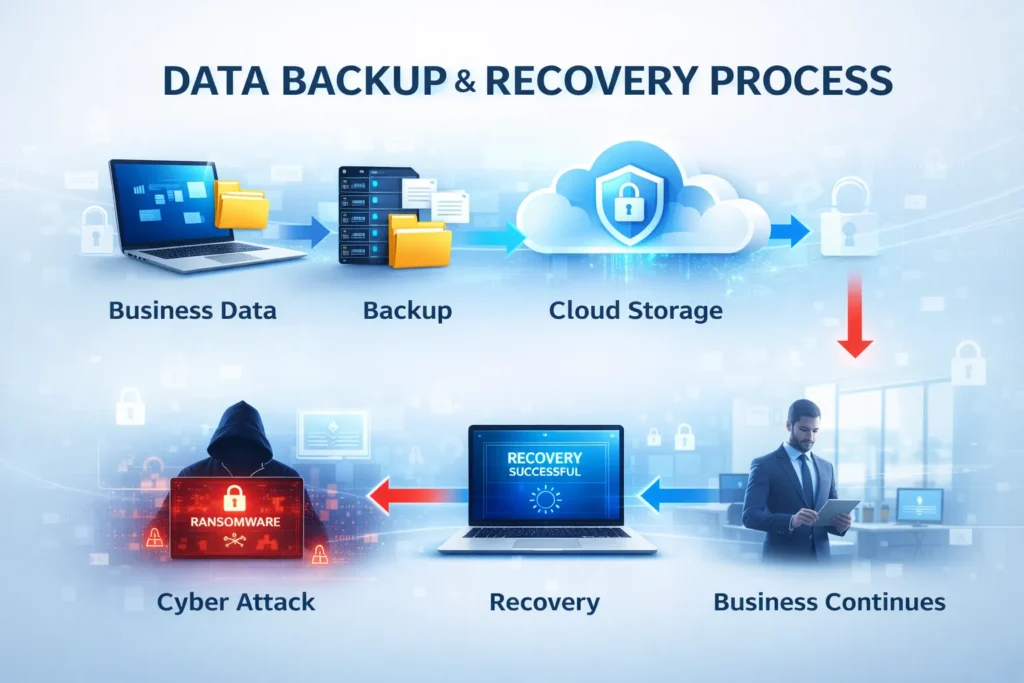
What Data Backup and Recovery Really Means
Data backup is the process of creating copies of important data and storing them securely. Recovery is the ability to restore that data quickly when it is lost, damaged, or compromised.
A strong backup and recovery system is not just about storing files. It is about ensuring access, accuracy, and speed during critical moments. Businesses that plan ahead recover faster and suffer fewer long-term consequences.
Why Businesses Lose Data More Often Than They Expect
Many business owners assume data loss only happens to large corporations. In reality, small and mid-sized businesses are often more vulnerable because they lack structured systems.
Common causes include:
• Hardware or server failure
• Accidental deletion or overwriting
• Cyberattacks such as ransomware
• Software corruption
• Power outages or physical damage
Without a backup, recovery becomes costly or impossible.
The Real Business Impact of Data Loss
Data loss affects more than internal operations. It directly impacts customer experience and brand reputation.
When systems go down:
• Operations stop
• Orders are delayed
• Customer trust weakens
• Compliance risks increase
• Financial losses grow
Even short downtime can cause long-term damage, especially in competitive markets where customers expect reliability.

How Backup and Recovery Protect Business Continuity
A well-planned data backup and recovery strategy allows businesses to continue operating even during unexpected disruptions.
Instead of scrambling to rebuild systems, teams can restore data quickly and resume work. This stability protects revenue, reduces stress, and keeps customer relationships intact.
Backup and recovery are not just IT solutions. They are risk-management tools that protect business momentum.
Key Benefits of Data Backup and Recovery
Business Continuity
With reliable backups, businesses can recover systems quickly and avoid extended downtime. This ensures that operations continue with minimal disruption.
Protection Against Cyber Threats
Ransomware and cyberattacks are increasing. Having secure backups means businesses can restore data without paying attackers or losing control.
Data Accuracy and Integrity
Backups preserve original data, protecting it from corruption or accidental changes. This is especially important for financial and customer records.
Regulatory and Compliance Support
Many industries require data protection and recovery plans. Proper backups help businesses stay compliant and avoid penalties.
Cost Control
Recovering data from backups is far less expensive than rebuilding systems or losing customers due to downtime.
Backup Without Recovery Is Not Enough

Many businesses back up data but never test recovery. This creates a false sense of security.
A backup is only valuable if:
• Data can be restored quickly
• Files are complete and accurate
• Systems function properly after recovery
Regular testing ensures that recovery plans work when they are actually needed.
Choosing the Right Backup Strategy
Not all backup solutions fit every business. The right approach depends on data volume, operations, and risk level.
Effective strategies often include:
• Automated backups
• Secure off-site or cloud storage
• Multiple backup versions
• Clear recovery timelines
Consistency matters more than complexity. A simple, well-maintained system is better than a complex one that is never monitored.
Cloud Backup and Recovery for Modern Businesses

Cloud-based backup solutions offer flexibility, scalability, and accessibility. They allow businesses to store data securely and recover it from anywhere.
Cloud recovery reduces dependency on physical infrastructure and improves response time during emergencies. For growing businesses, it provides a practical and cost-effective solution.
At elixirmark, we encourage businesses to view cloud backup as part of a broader digital resilience strategy.
Why Proactive Planning Makes the Difference
Waiting for a data loss event to think about recovery is risky. Businesses that plan ahead recover faster and maintain customer confidence.
A proactive backup and recovery plan answers important questions:
• What data is most critical
• How fast must systems be restored
• Who is responsible during recovery
Clarity reduces panic when issues arise.
Building a Safer Digital Foundation
Data backup and recovery are not technical luxuries. They are business necessities. In a digital environment where downtime equals lost opportunity, preparedness becomes a competitive advantage.
Businesses that protect their data protect their future.
At elixirmark, we help businesses think beyond short-term fixes and build digital systems that support stability, security, and growth. A strong backup and recovery strategy ensures that when challenges arise, your business stays in control.
If you want your business to operate with confidence and resilience, securing your data is the place to start.